
English| EUR
Suggested for you
More currencies
Choose a language
Phuket Old Town offers one of Thailand's most varied food scenes, where a bowl of noodles costs less than a cappuccino and a full seafood dinner can still come in under 500 baht. Understanding the price tiers helps you plan meals that fit your budget without sacrificing quality or variety.
Quick answer
The cost of food in Phuket Old Town spans four clear tiers: street hawker meals run 40-80 THB, local shophouse restaurants charge 80-150 THB per dish, mid-range cafés and bistros sit at 200-400 THB, and upscale dining starts around 600 THB per person. A day of mixed eating typically costs 400-800 THB depending on choices.
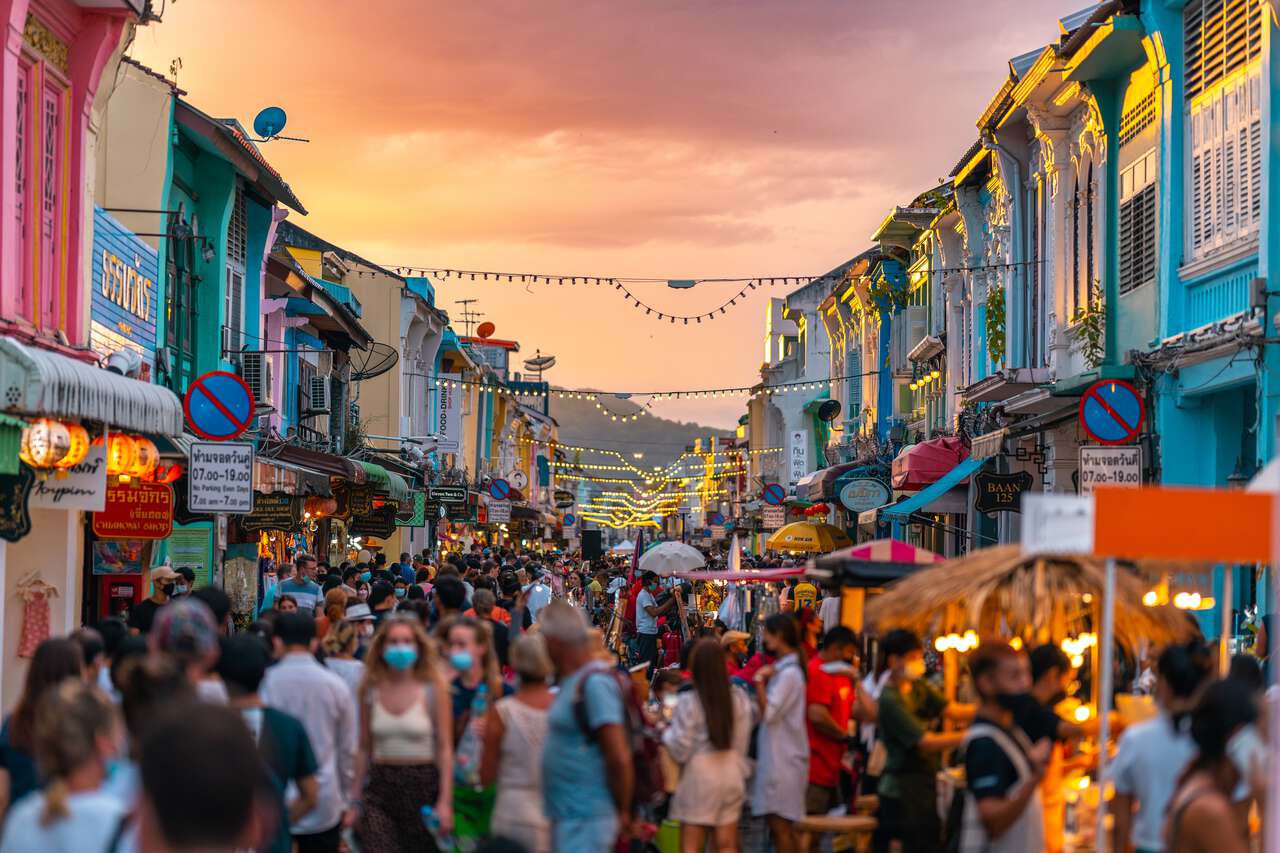
A single plate of pad thai from a Thalang Road cart costs 50 baht, while the same dish at a renovated Sino-Portuguese café three doors down runs 180 baht. That price gap defines the Old Town's food economy, where colonial-era shophouses now hold both family-run noodle counters and design-forward brunch spots, often on the same block. Phuket food costs reflect three overlapping systems. The hawker tier—metal carts, plastic stools, no English menus—operates on local pricing unchanged for years. A full breakfast of jok rice porridge, pa thong ko fried dough, and coffee totals 60 baht. The shophouse tier serves the same Hokkien mee and khanom jeen your server's grandmother ate, now plated for both locals and visitors at 100-140 baht per dish. The café tier, concentrated along Dibuk and Yaowarat Roads, targets the design-conscious crowd with 220-baht smoothie bowls and 280-baht pasta, though portion sizes hold steady and ingredients often come from the same morning market. Evenings shift the balance: seafood restaurants along Phang Nga Road charge by weight, and a shared grilled snapper, stir-fried morning glory, and fried rice for two rarely exceeds 700 baht total. Sino-Portuguese architecture makes every meal photogenic, but it does not dictate price. A humble roti stall tucked under a heritage arch charges 35 baht for banana roti whether or not you photograph the facade. Meanwhile, third-wave coffee shops in restored mansions list single-origin pour-overs at 150 baht, a premium justified by imported beans and air conditioning, not location alone. The Old Town's layout rewards walkers: side sois branch off main drags into neighborhoods where khao gaeng curry-over-rice counters serve three-curry plates for 70 baht and close by 14:00 when the pots run dry. Budgeting becomes simple once you recognize the visual cues. Laminated menus with photos suggest mid-range pricing. Handwritten paper menus in Thai signal local rates. Chalkboard specials in English typically double the base cost but include espresso drinks and western-style plating. The cost of food in Phuket Old Town ultimately mirrors your tolerance for plastic furniture and your willingness to eat on Thai time, when lunch counters open at 09:00 and the best roti appears after 18:00.
“A single plate of pad thai from a Thalang Road cart costs 50 baht, while the same dish at a renovated Sino-Portuguese café three doors down runs 180 baht.”
Phuket Old Town offers a diverse range of food prices, catering to both budget-conscious travelers and those seeking comfortable sit-down experiences. Costs generally reflect the type of establishment rather than fixed tourist rates.
How to spend less
Verdict: A daily food budget ranges from 500 THB for budget travelers to 1,500 THB for a more comfortable experience.
The best arrival window is 10:00–16:00, which allows visitors to avoid peak midday heat while ensuring access to a wide range of food vendors before the evening rush. Timing your visit during these cooler hours supports a more comfortable dining experience while exploring the culinary offerings of Phuket Old Town.
Dry and cooler, 24°C–32°C
Peak tourism season offers stable weather but increased foot traffic for popular food spots.
Hot and humid, 27°C–35°C
Higher temperatures make midday exploration challenging, though food availability remains consistent throughout the day.
Rainy season, 24°C–31°C
Frequent rain showers provide lower visitor numbers, often resulting in shorter waits at local restaurants.
—
Visiting during the early part of the week avoids weekend crowds and provides a more relaxed atmosphere for sampling local dishes.
Verdict: For the most comfortable dining experience and manageable crowds, aim for a weekday arrival between 10:00–16:00 during the months of June or October.
Phuket Old Town remains accessible throughout the week, allowing visitors to explore dining options at their convenience.
Everything you need to know about cost of food in phuket
The cost of food in phuket varies widely depending on your preference for local street vendors or air-conditioned dining establishments. Budget travelers can enjoy authentic Thai dishes at very affordable prices throughout the town.
There are no entrance fees for the streets themselves as public access is 0 THB. You only pay for the specific items you order at various dining establishments.
Street food stalls typically offer lower prices for iconic dishes like Hokkien noodles compared to sit-down restaurants. Managing your expected cost of food in phuket is easier by sampling a variety of small portions from local vendors.
While a guided tour is an investment, it simplifies logistics and helps you navigate local pricing. You can focus on enjoying the authentic flavors of Phuket Old Town without worrying about finding the best value spots on your own.
Visiting between 10:00 and 16:00 is recommended to avoid peak heat while finding plenty of open options. This window provides access to many shops and eateries before the busier evening dinner hours begin.
The cost of food in phuket is generally stable, though some upscale venues may adjust prices for evening service. For the most consistent pricing and to avoid the largest crowds, try dining during the daylight hours.
Is Food Expensive in Phuket?
Read more Tickets & toursPhuket Food Walking Tours
Read more Tickets & toursPhuket Night Street Food Walking Tours
Read more GuideFood Safety Guide: What Not to Eat in Phuket
Read more Tickets & toursPhuket Old Town Food Tours
Read more Tickets & toursPhuket Street Food Tours
Read more